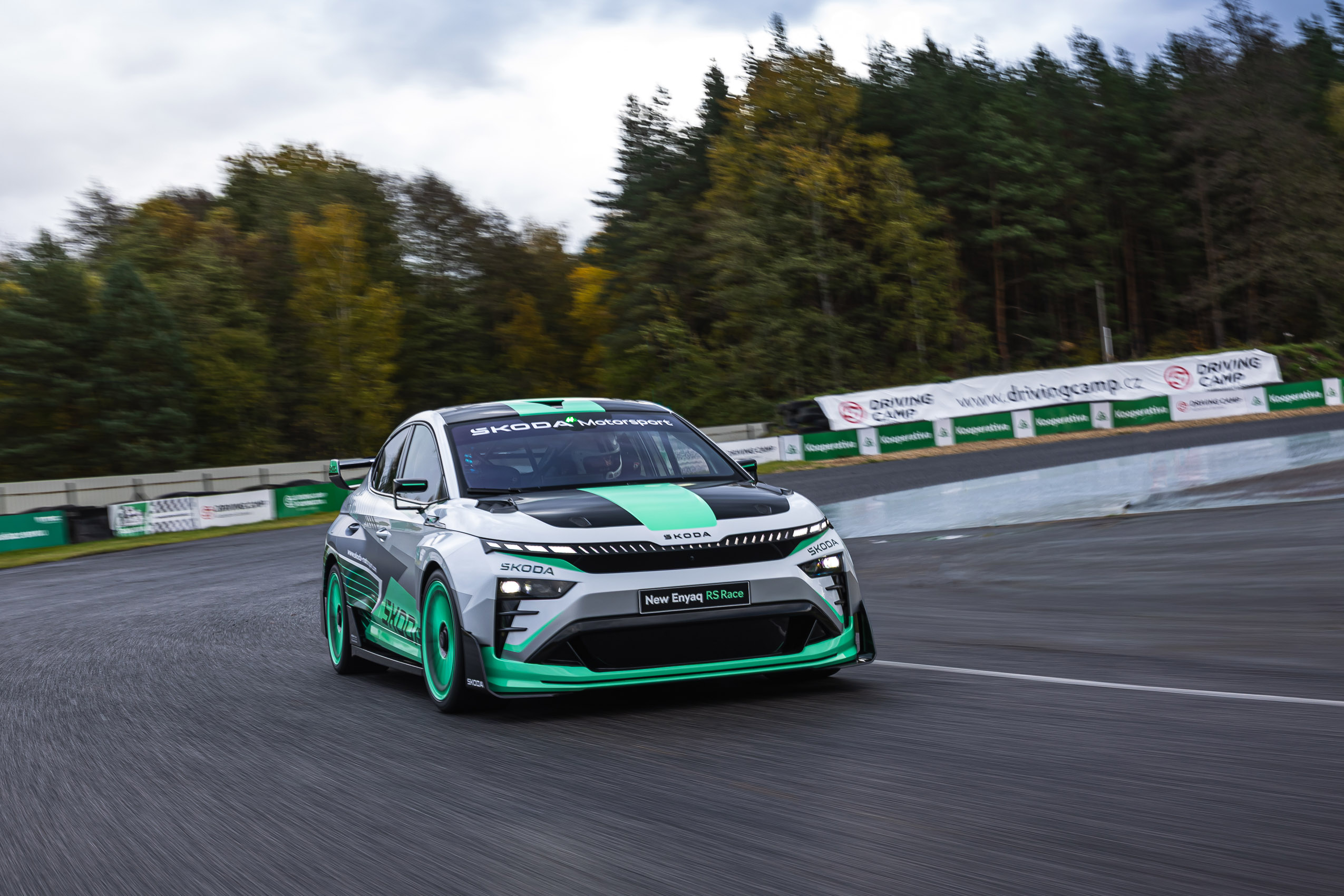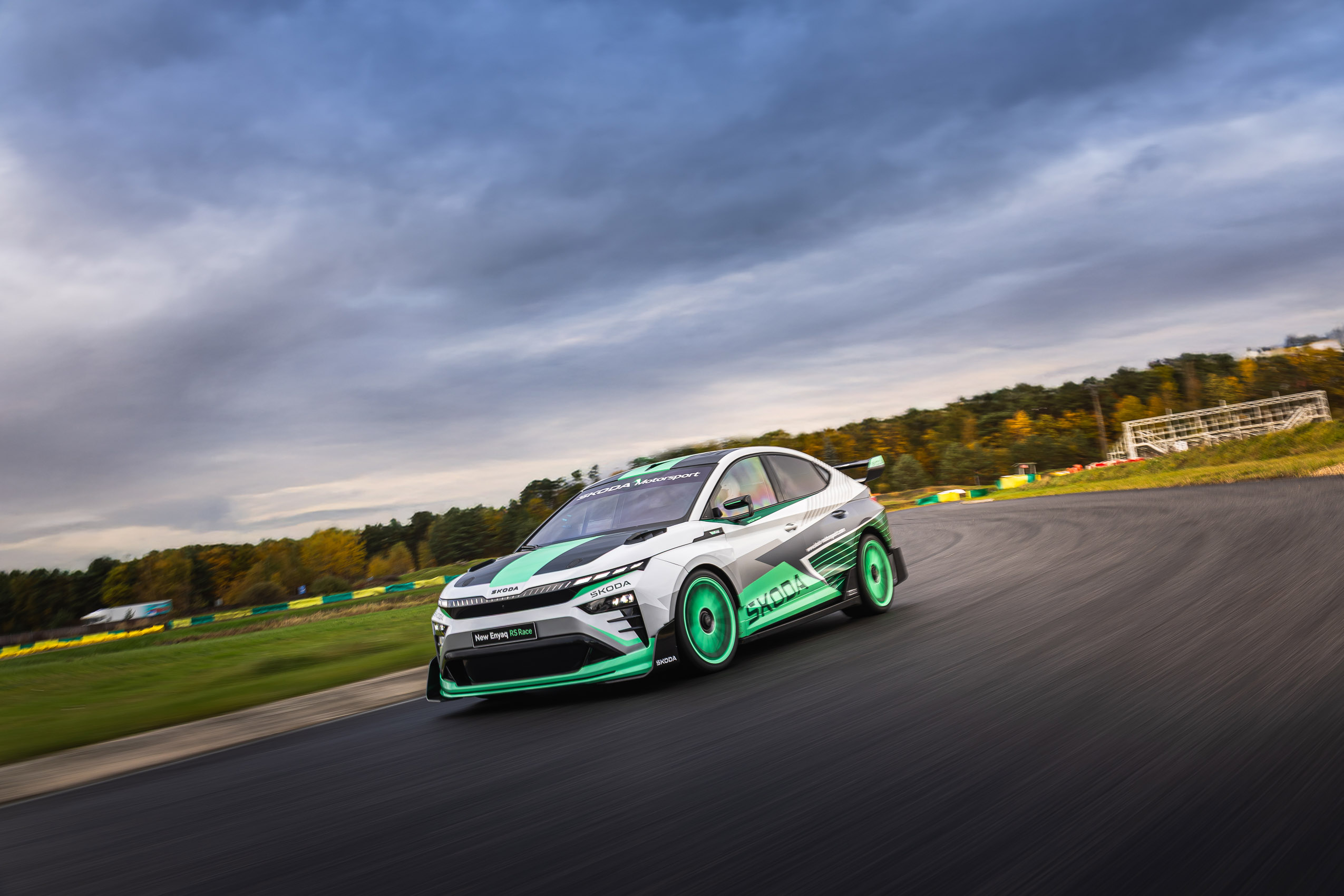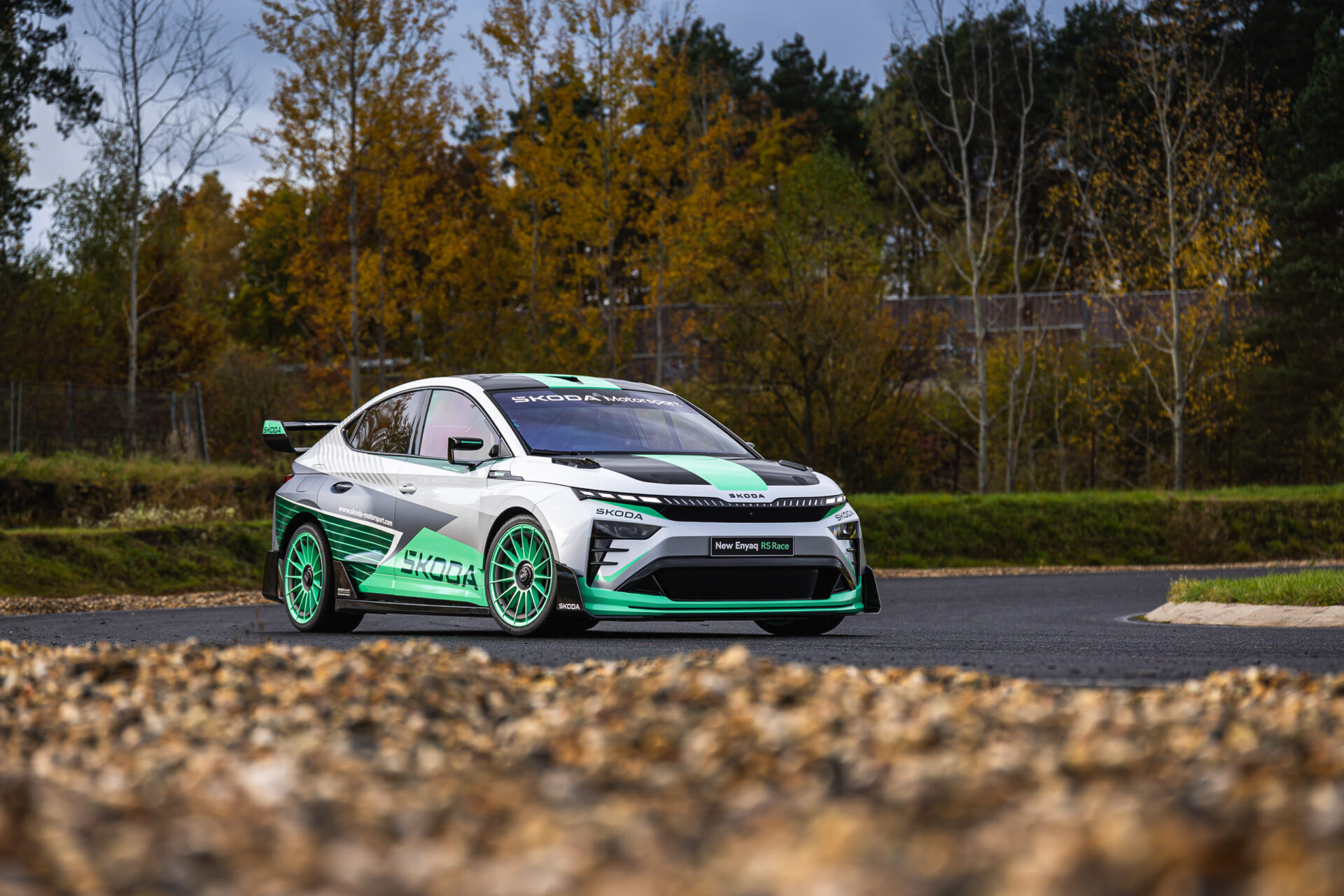
The electric concept of the Enyaq RS Race is not just a technical and design study. In addition to new solutions that can find their way into rally specials and road cars, it's also an extremely fun car.
The Enyaq RS Race is an electric racing concept car that is serious. Thanks to the use of bio composite materials and other lightweight components, the engineers saved 316 kilograms of weight on the car. As a result, despite the power of the standard powertrain with 250 kW (there is also a standard battery with a capacity of 82 kWh), the Enyaq RS Race is a very agile and fun sports car. The top speed remains 180 km/h.
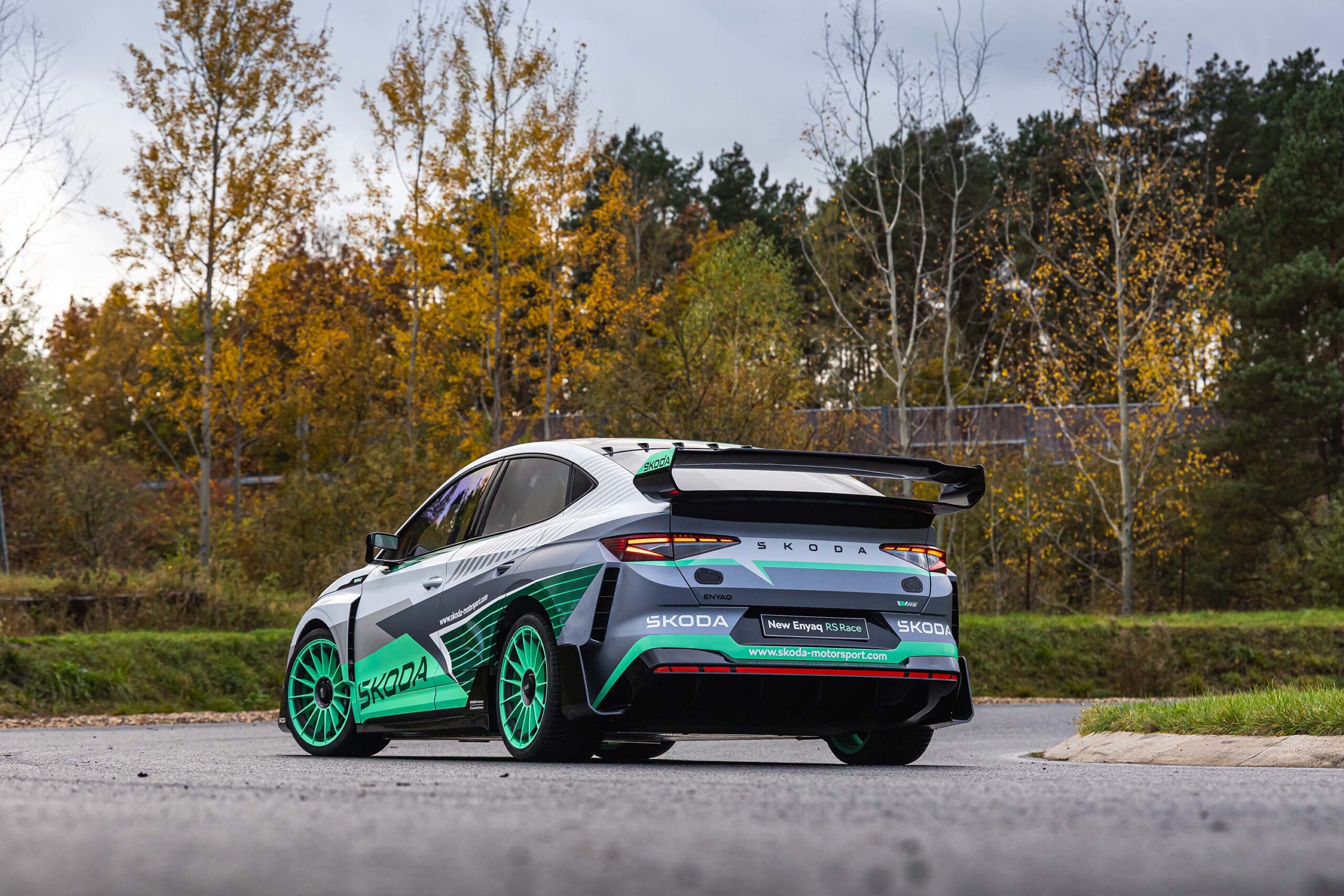
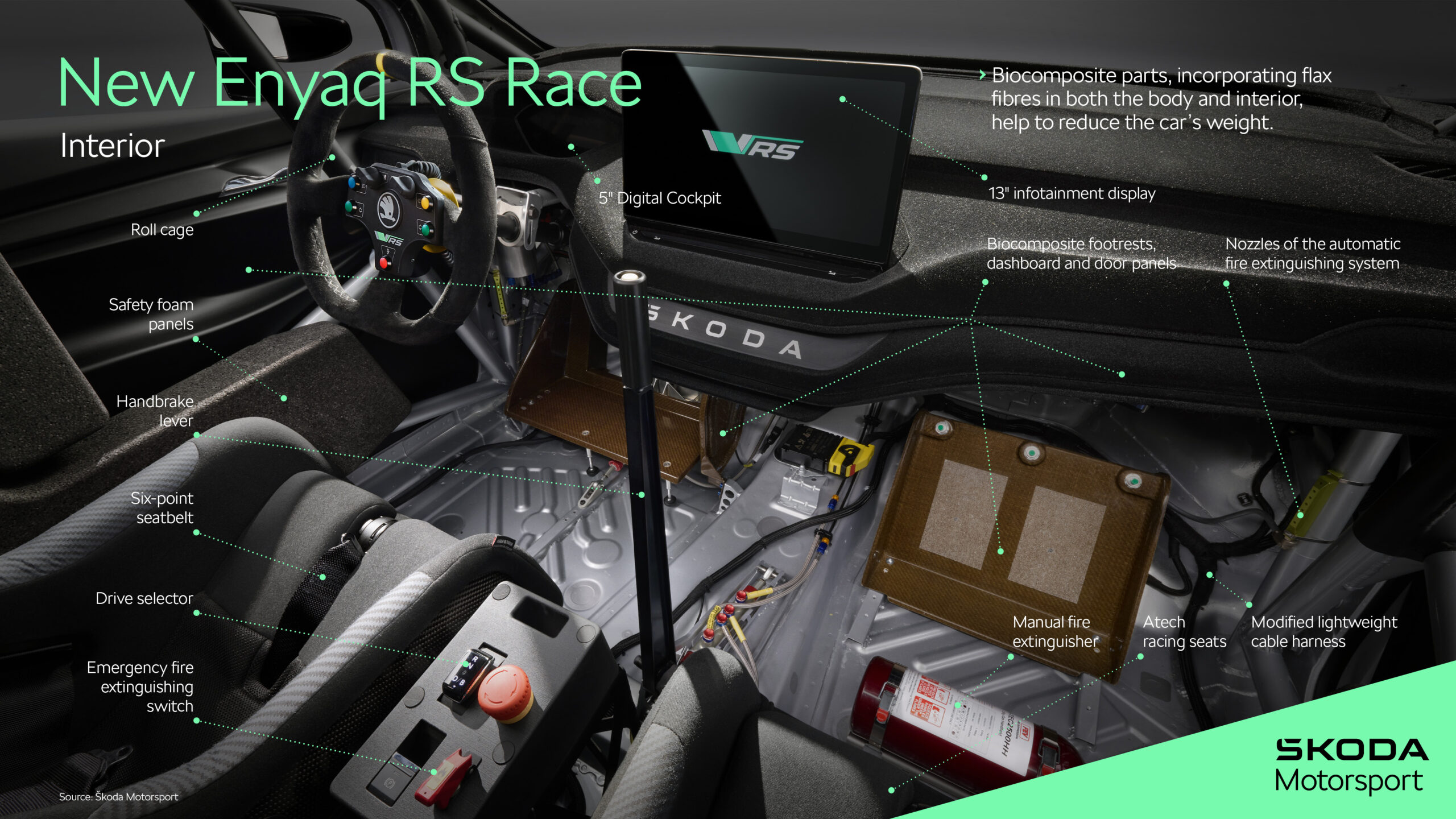
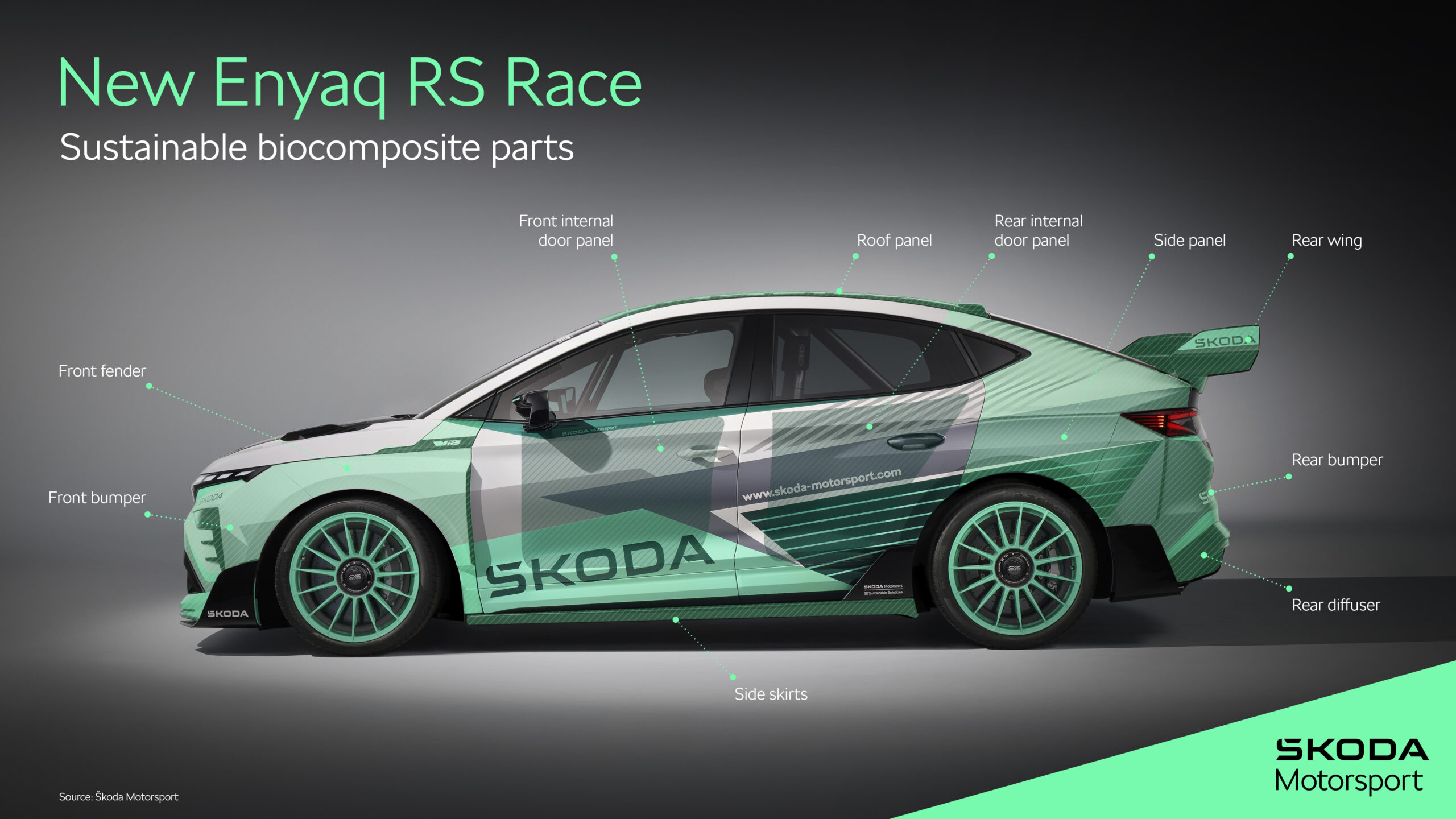
Overall, the Enyaq RS Race achieves a reduction in weight and centre of gravity through a combination of partial stripping of the interior and the use of polycarbonate side windows (including the rear one). Another significant contribution to weight reduction is the use of new bio composite materials based on flax. These are used on the car´s bumpers, fenders front and rear, rear diffuser, sills, roof, rear spoiler and other some interior elements.
These materials replace traditional carbon composites and point the way to more sustainable solutions in motorsport. Their use reduces lifecycle emissions by 85% compared to carbon parts. 3D printing has also contributed to a further reduction in emissions during vehicle construction. Dozens of car parts have been created using this method, many of which are printed from recycled materials such as nylon or CO2-neutral biopolymers.
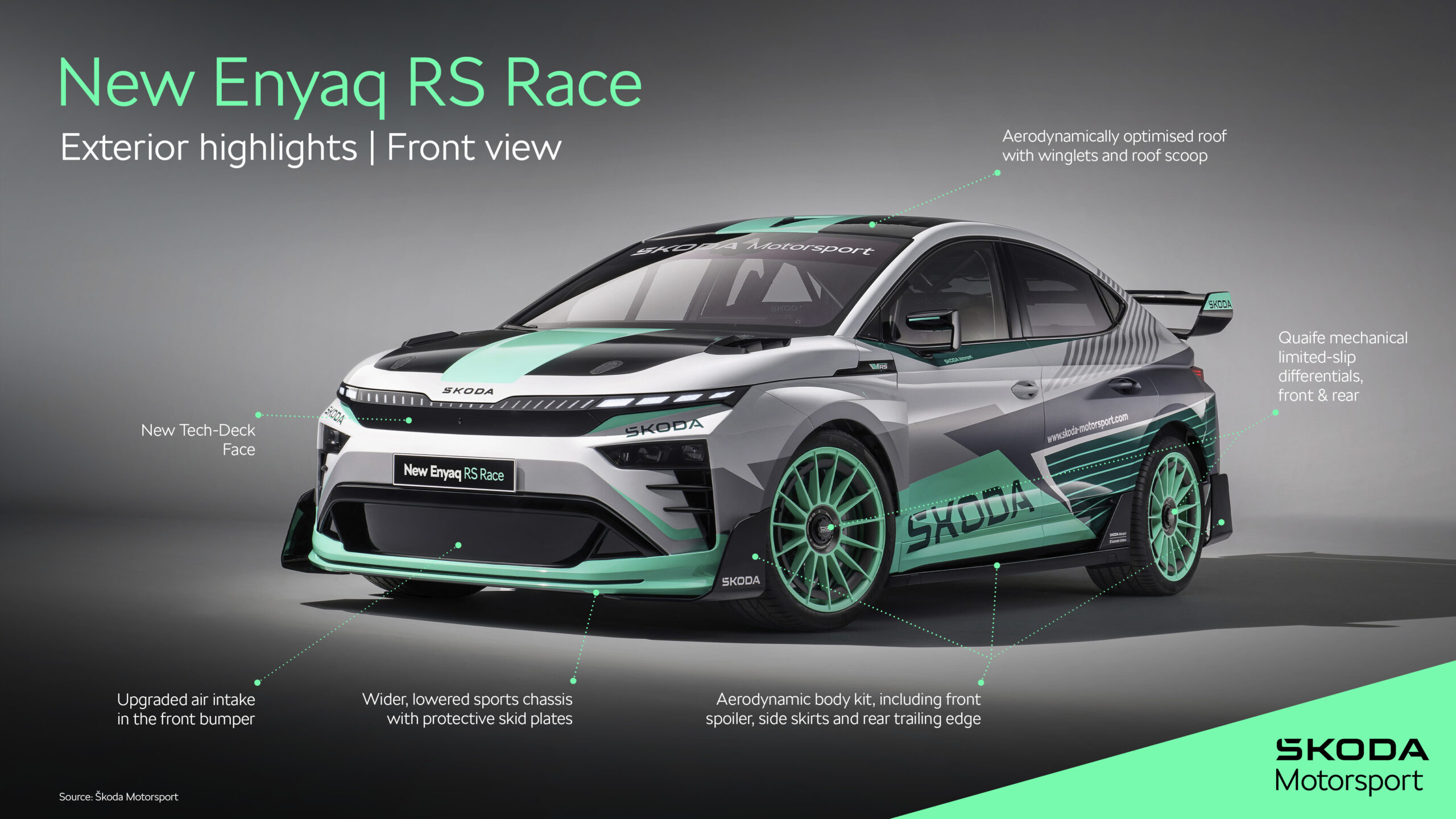
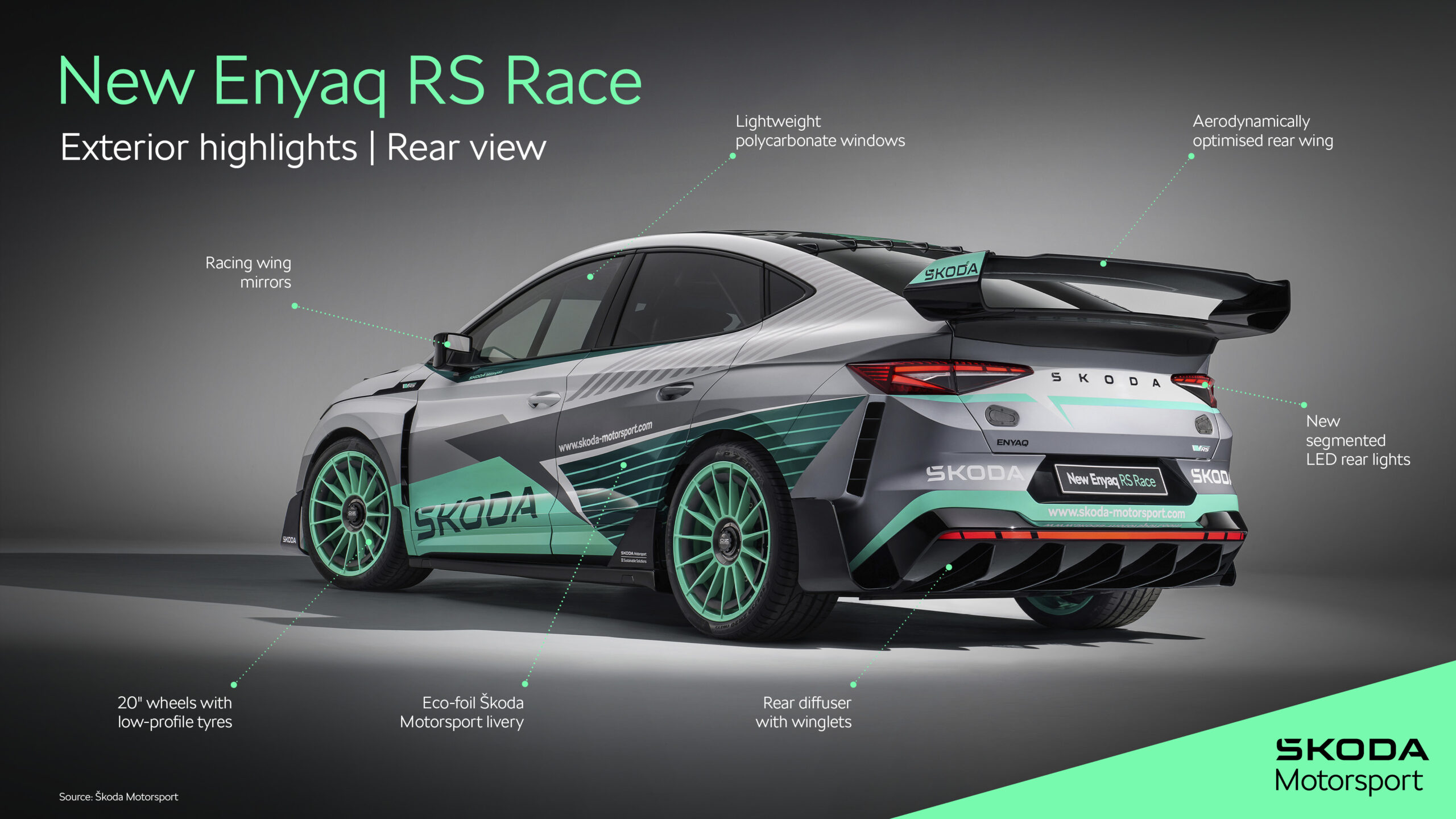
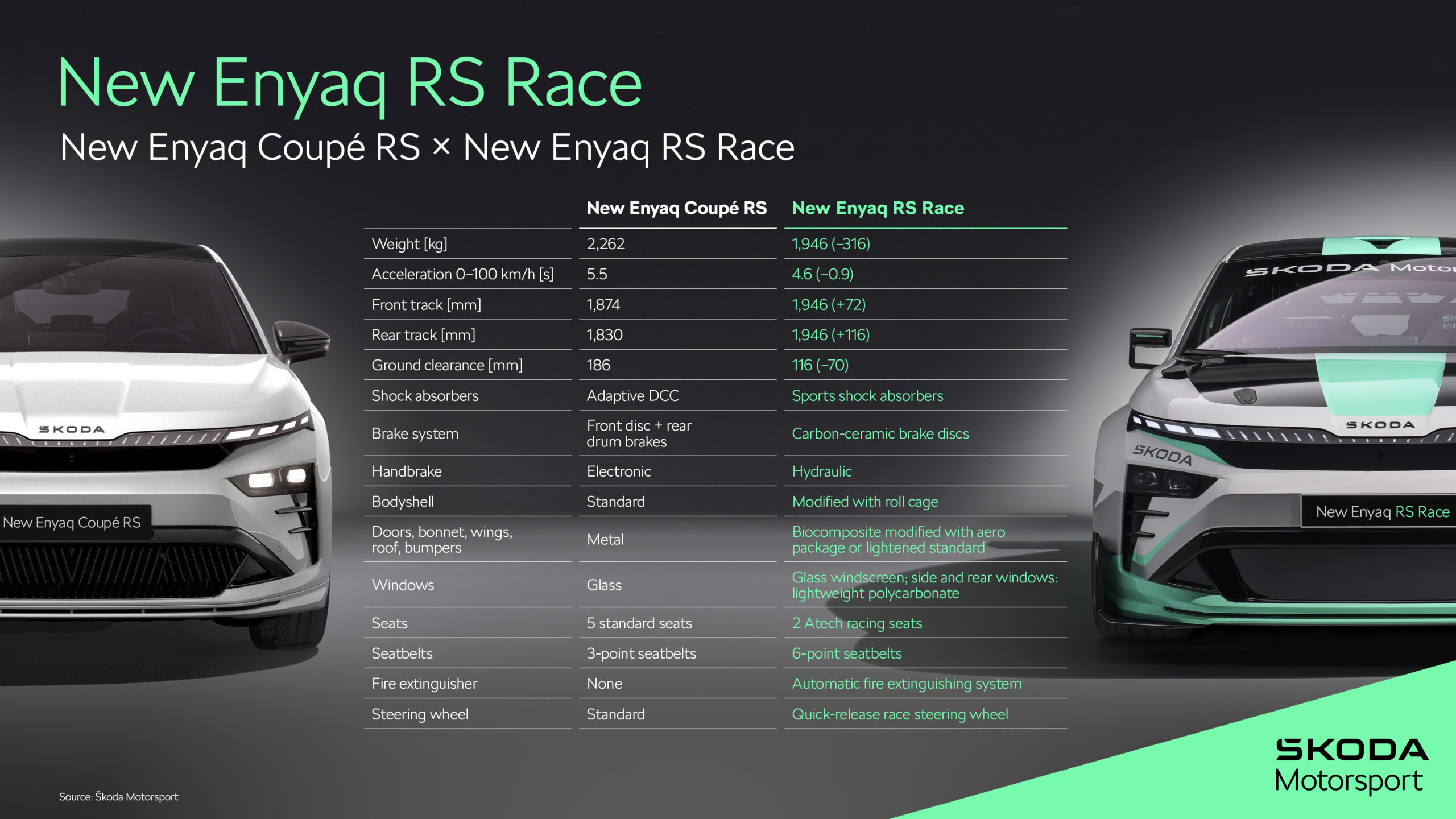
Interestingly, in this case, the parameters of the car themselves are something extra, for example, acceleration from 0 to 100 km/h takes only 4.6 seconds. To improve handling, the Enyaq RS Race has been given adjustable sports shock absorbers and springs, the chassis has been lowered by 70 mm to 116 mm, and stability is also improved by a wider track, thus increasing the front width by 72 mm and the rear width by 116 mm.
For more information about the Enyaq RS Race, see the articles already published:
Enyaq RS Race in action: praise from the rally champion and a fan