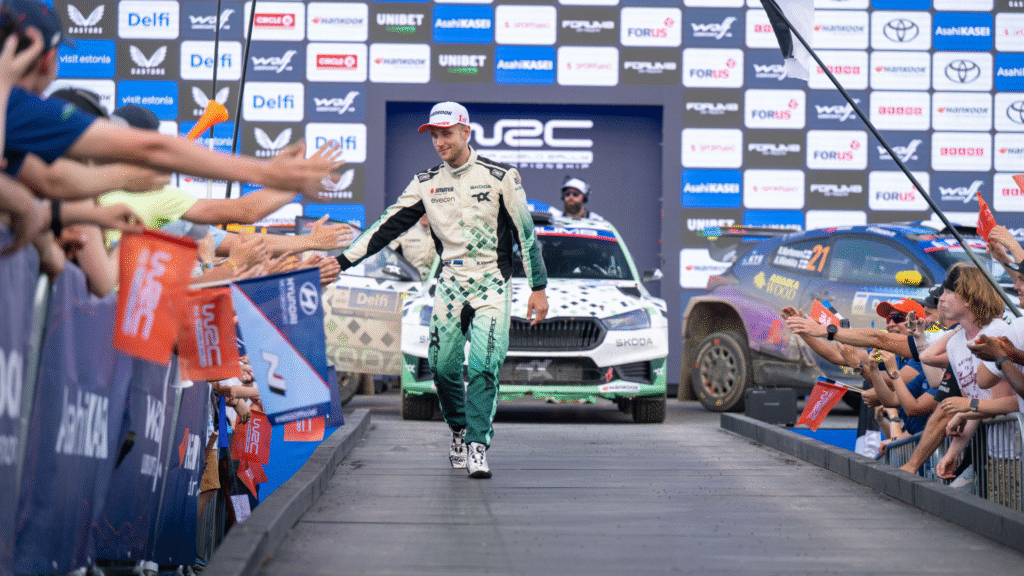
Škoda Motorsport is celebrating 125 years, and we are commemorating key milestones from this long and rich history. Today, we are going back to the very beginning – tracing the footsteps of the first championship title, albeit from an unofficial championship, brought to Mladá Boleslav by Václav Vondřich.
On 27 June 1901, Narcis Podsedníček lined up at the start of the Paris–Berlin race aboard a Laurin & Klement motorcycle, thereby laying the foundation stone of what we now know as Škoda Motorsport. This year marks 125 years since machines from Mladá Boleslav have been competing – from the first pioneers on the dusty roads of the Austro-Hungarian Empire, through endurance heroes at the Rallye Monte Carlo, to today’s WRC2 champions competing worldwide. Today, it is widely recognised that Škoda is a brand of champions. But who secured the very first title?
And so the racing began
Let’s start from the beginning. Factory owners Václav Laurin and Václav Klement understood the importance of racing right from the start. When the world of motorcycles began to emerge alongside that of bicycles, and they figured out the optimal placement of the engine within the frame—improving the center of gravity thus making handling easier—they had to let the world know. Reliability and performance, after all, are best proven in motorsport.
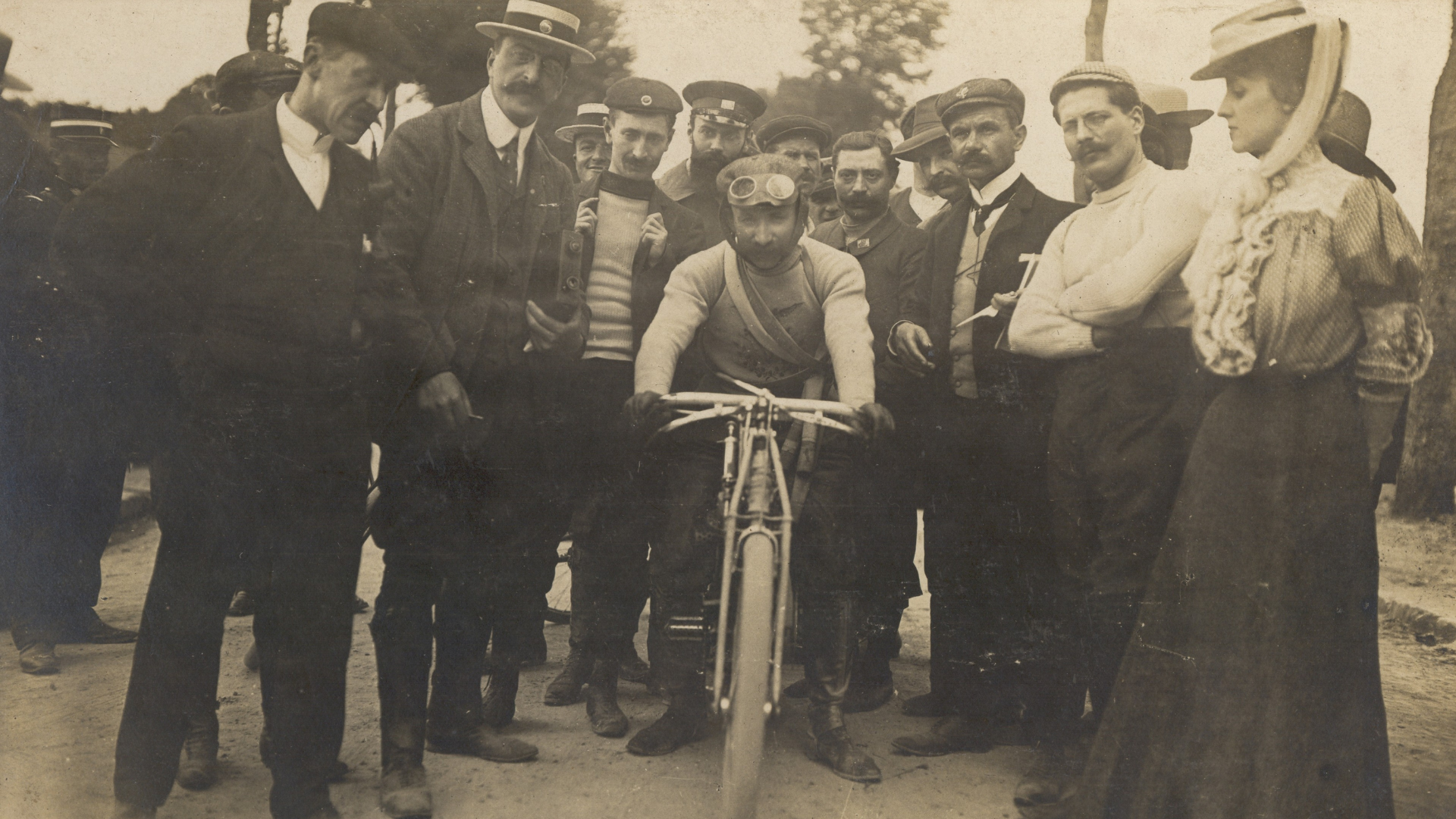
The first successful motorcycle racer was the aforementioned Narcis Podsedníček, who had been working at Laurin & Klement since 1900 and took to the handlebars a year later. He reached the finish of his first race from Paris to Berlin as the leading motorcyclist – according to some sources, the only one. However, the inexperienced Podsedníček, alone in a large city, had his arrival confirmed only by a police officer. As he reached the finish during the night and found no officials present, his victory was ultimately not recognised.
Upon returning home, the founders set about improving their machines based on valuable insights gained from race. Podsedníček became a respected motorcycle expert and continued to compete regularly. He was also an instructor, teaching, among others, Count Alexander Kolowrat how to ride a motorcycle.
Races, sometimes stretching over a thousand kilometers, soon became an integral part of the brand, and by 1903, Mladá Boleslav motorcycles were a fixture at every major sporting event— with riders securing 31 gold medals from 33 starts. The enthusiasm for motorsports simply radiates from the historical sources.
Revenge for the nails
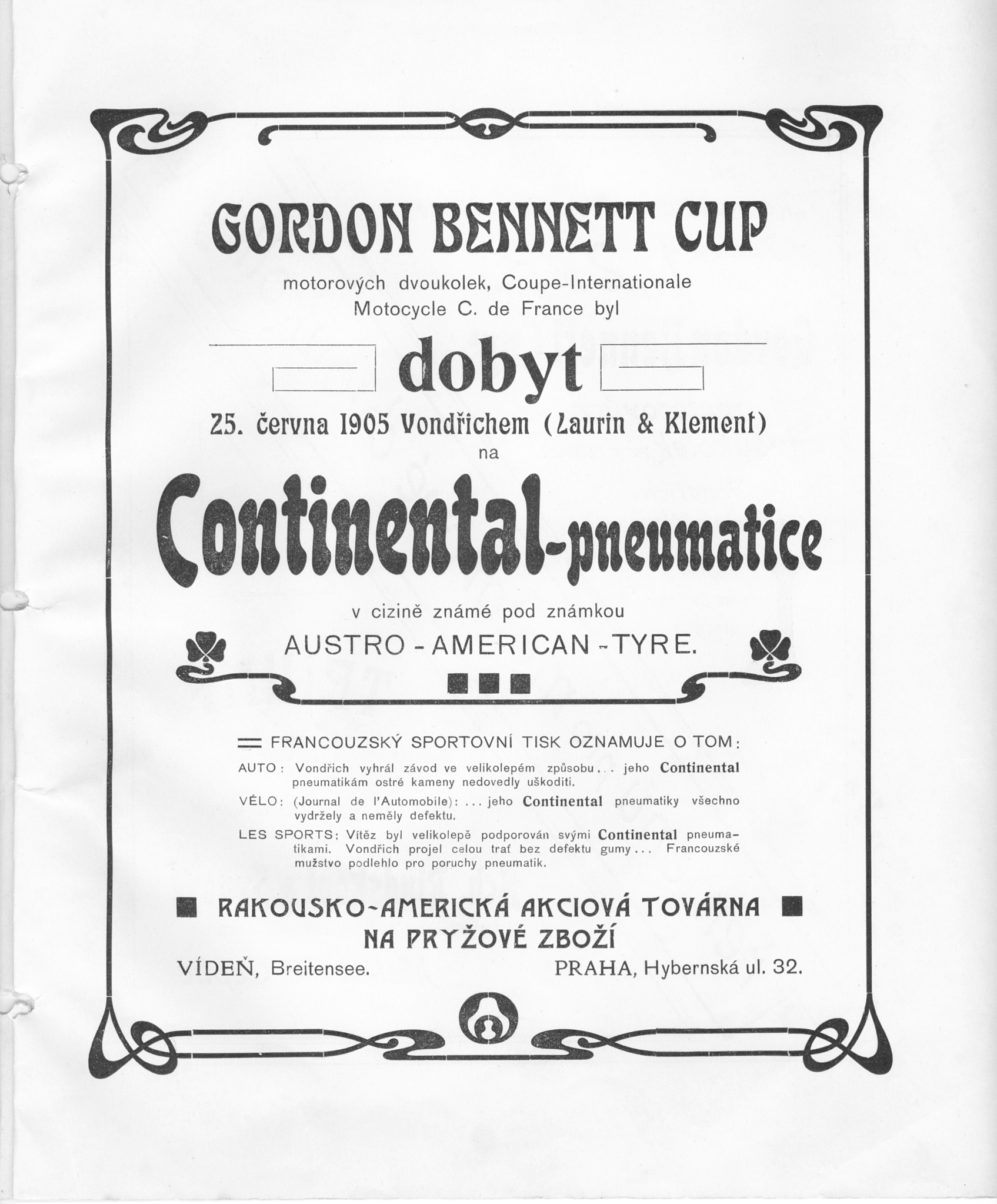
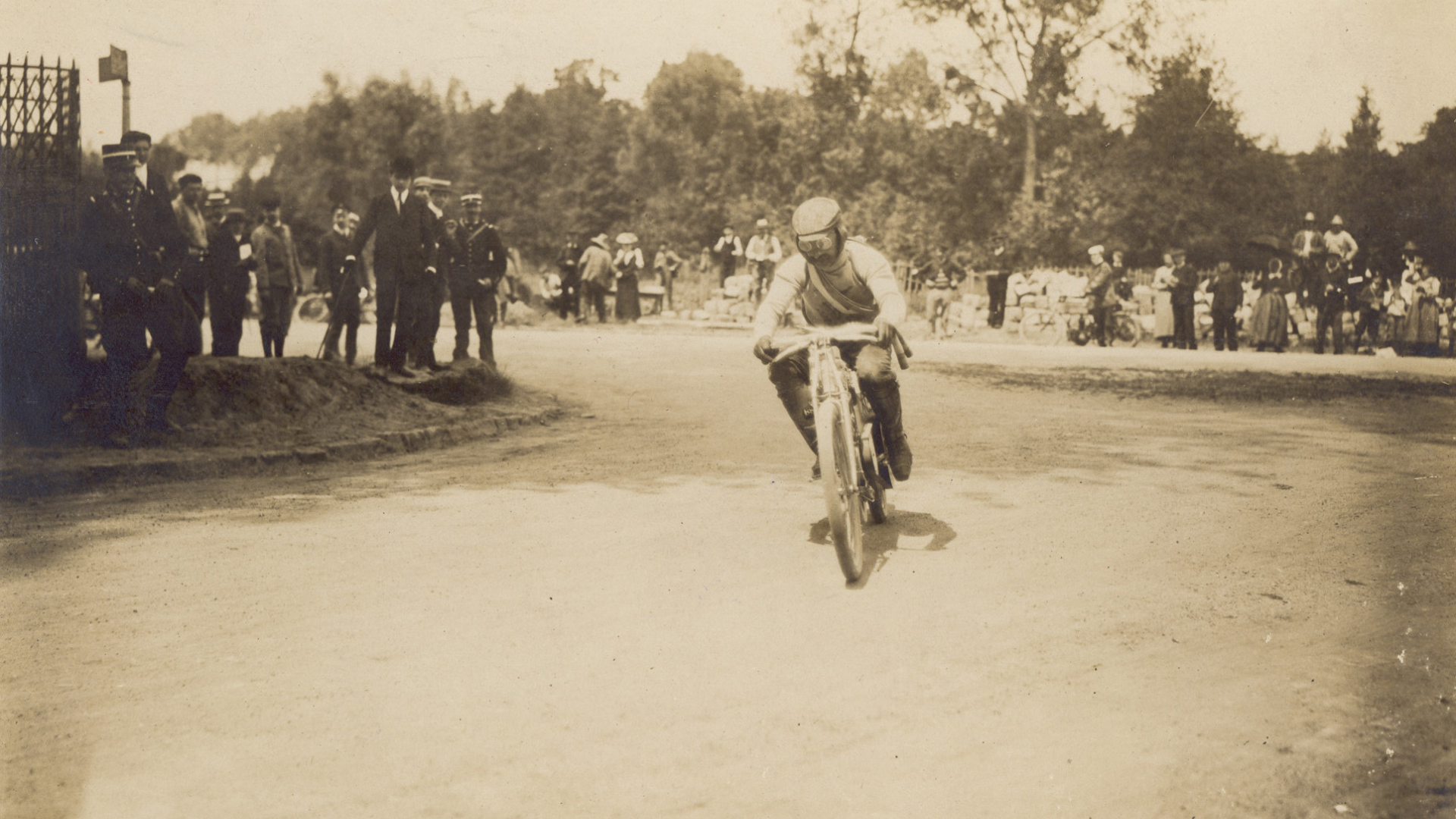
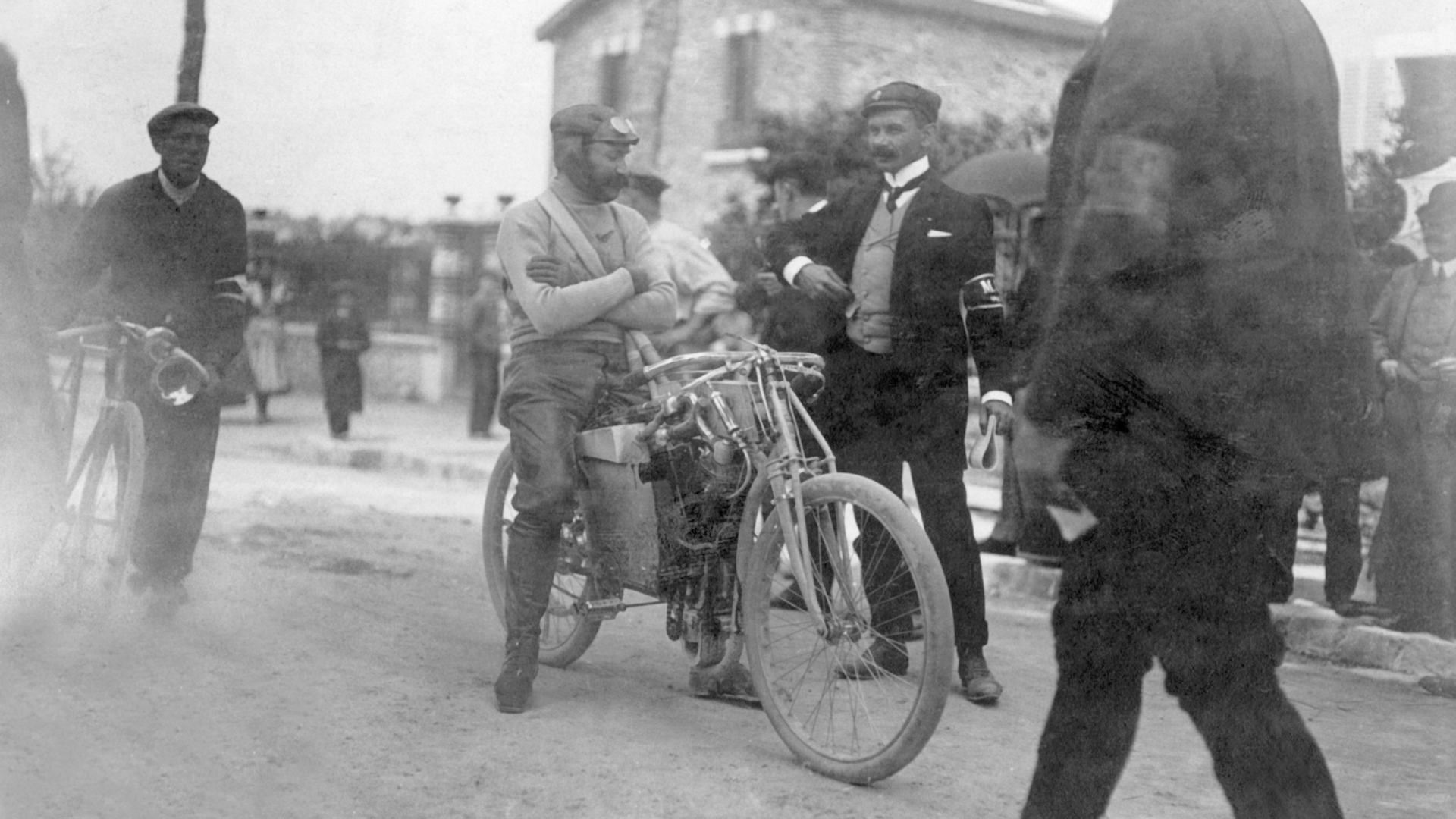
In 1904, the Gordon Bennett Cup, the world’s first official motorcycle race of nations, was held in the French town of Dourdan. Representing the Austro-Hungarian Automobile Club was a certain Václav Vondřich, an experienced bicycle racer who had become captivated by motorcycles. Originally a file maker, he also caught the eye of Václav Klement, who signed a contract with him at the beginning of that same year. Vondřich thus mounted a two-cylinder CCR 5 HP model. But his first attempt in France didn’t go as planned. Some mischievous spectators sabotaged his efforts by scattering nails on the track. One punctured his tire, and Vondřich crashed. Although he dusted himself off, repaired the motorcycle, and even rejoined the race, he was unable to make up the lost time.
Vondřich did not give up and resolved to train even harder. Meanwhile, the Fédération Internationale des Clubs Motocyclistes (FICM) was established in Paris – today known as the FIM. The Dourdan race was officially elevated to a world championship event, and Vondřich qualified. He trained intensively – riding fast on rough roads and practising repairs. For this purpose, he devised an ingenious solution, which today might be described as “Simply Clever”: he had a leather bag made by a saddler to carry spare parts on his back. This earned him the legendary nickname “The Travelling Blacksmith”.
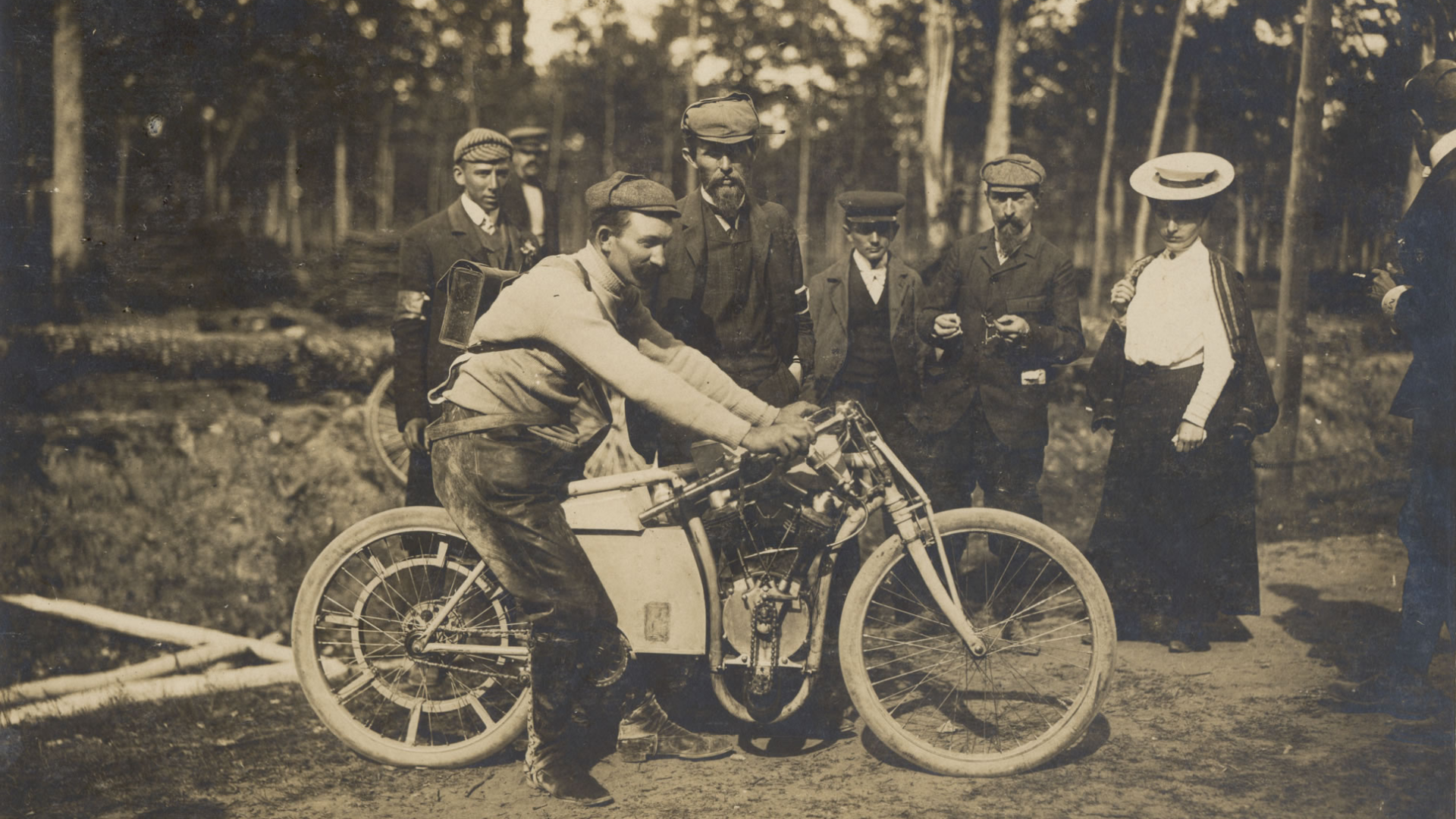
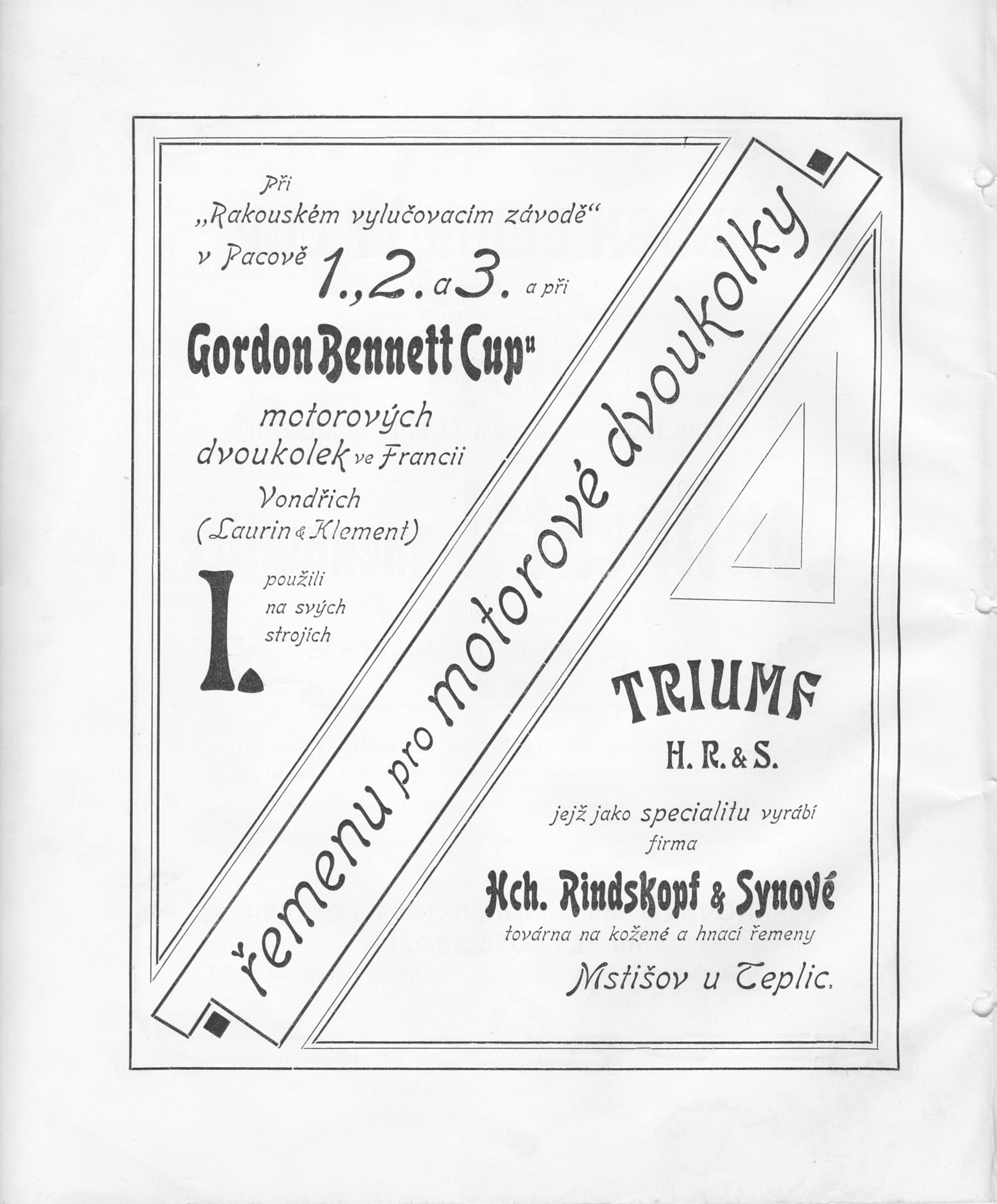
With this bag, he started the race on 25 June 1905 aboard an improved Laurin & Klement CCR twin-cylinder motorcycle. Facing the strongest international competition, he was set to complete five laps of a 54-kilometre circuit. After the first lap, the situation did not look promising. Léon Demeester, the previous year’s winner, led by twenty-one seconds. However, Vondřich responded decisively, and by the end of the second lap, his bag was already obstructing Demeester’s view ahead. By the fourth lap, Vondřich held a lead of two minutes.
Vondřich reached the finish successfully and could celebrate victory. His rival was subsequently disqualified for an illegal wheel change. Giosuè Giuppone, riding a Peugeot, moved up to second place – albeit with a deficit of thirty minutes. None of the other competitors completed the race, and the well-prepared rider ultimately outperformed them all. “That is for the nails,” he must surely have thought.
Within a single day, Václav Vondřich became a national hero. His triumph was later immortalised in the book Dědeček automobil (Vintage Car), which was adapted for the silver screen in 1957 by Alfréd Radok. Václav Vondřich remains one of the most prominent sporting figures of the first half of the 20th century. His passion continues to inspire, and Škoda Motorsport carries forward the legacy of him and other stars of that era to this day.