As Škoda Motorsport celebrates its 125th anniversary, we look back at its greatest victories. Last time, our journey ended in the 1960s. Now we move to the turn of the 1980s and 1990s, when the world of Škoda Motorsport – and of the whole of Czechoslovakia – was turned upside down.
By the 1990s, Škoda Motorsport already knew very well what victory tasted like. Following the fall of the communist regime and the return to democracy in 1989, an entirely new world of freedom opened up. New opportunities were everywhere, and the West invited exploration. The new Škoda Favorit hatchback became the perfect vehicle for this new era.
The Favorit represented a turning point in many respects, above all in its approach to driving at the limit. After decades of cars featuring the "everything at the rear" layout, the exact opposite arrived. The engine and gearbox were moved to the front, while the front axle became the driven axle instead of the rear wheels. This required a completely different driving style as well as extensive testing. Factory drivers Ladislav Křeček, Svatopluk Kvaizar and Pavel Sibera therefore undertook comprehensive testing on a frozen lake in Finland.
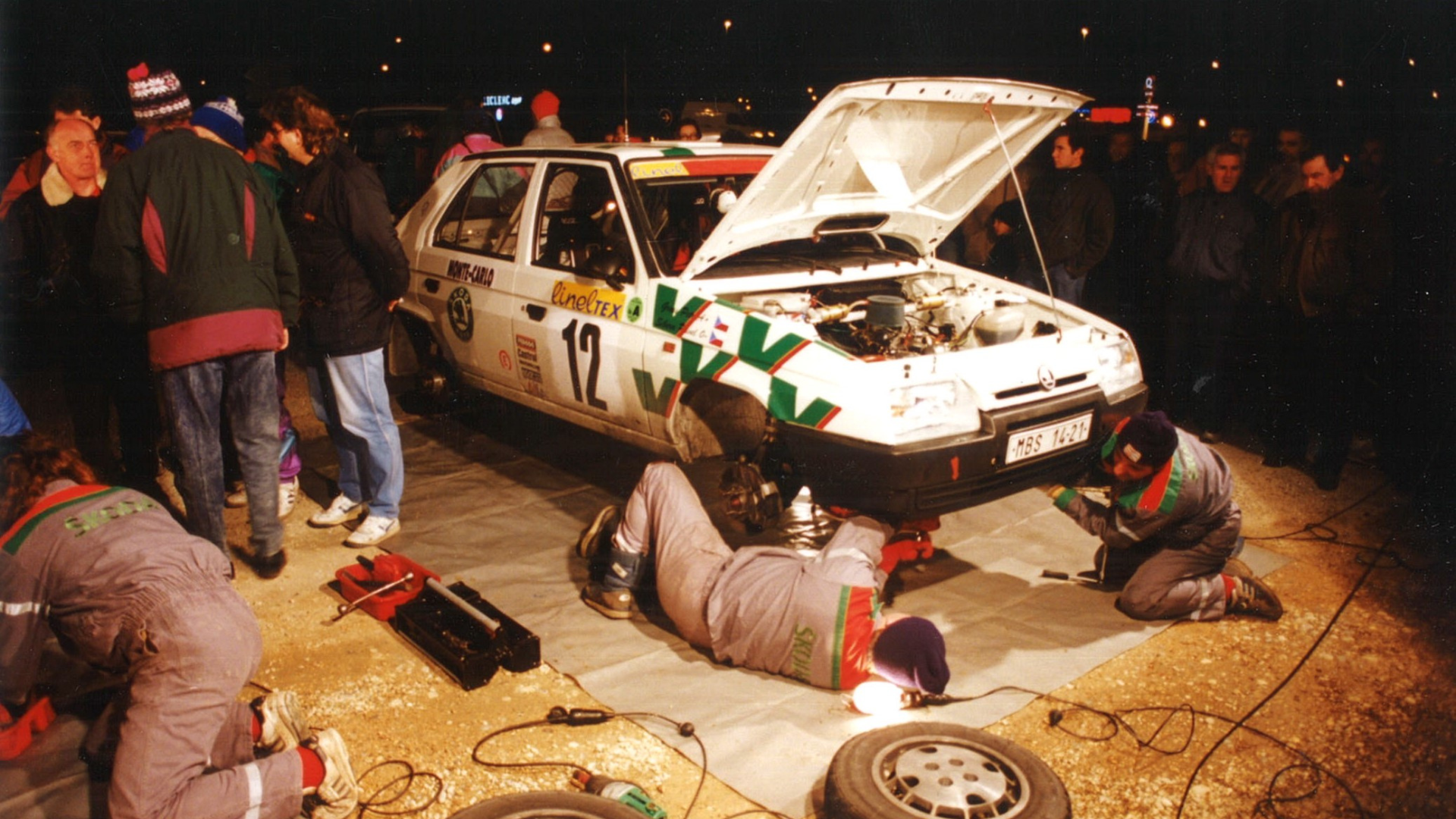
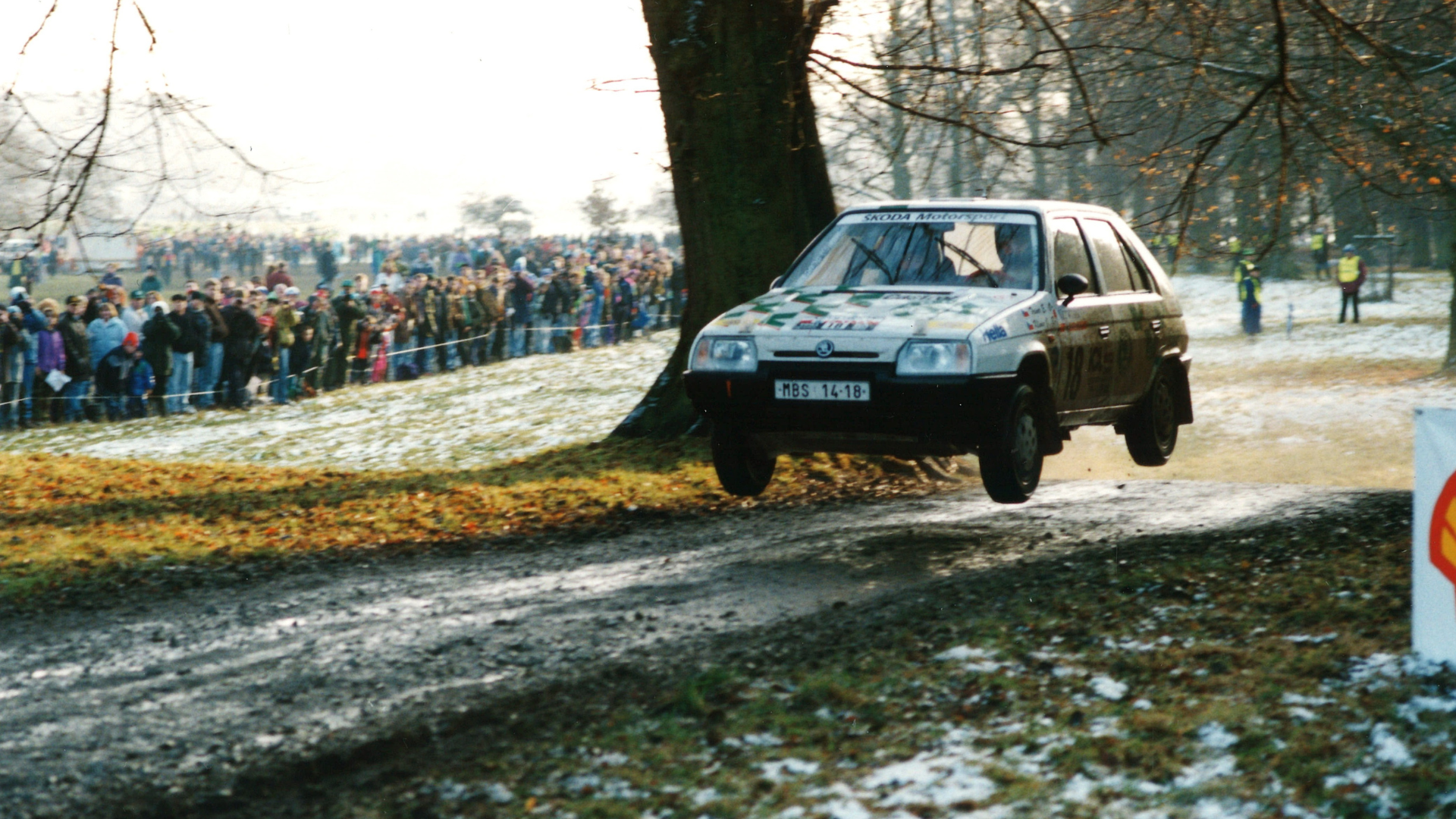
The Škoda Favorit 136 L began competing in 1988, shortly after production had commenced. It first appeared in domestic events, where, before homologation, factory driver Vladimír Berger drove it in the role of a zerocar. The Favorit was homologated on 1 January 1989 under the number A-5373. Three weeks later it was already tearing up the track at the Valašská Zima Rally, and at the end of February it made its international debut at Finland's Hankiralli, where Kalevi Aho claimed victory in his class with the car.
A major milestone followed in 1991 with the integration of Škoda Auto into the Volkswagen Group. Fortunately for the factory team, this brought stability as well as excellent conditions for further development. This era also saw the creation of a new corporate logo, during which the then-head of the Škoda Motorsport team Pavel Janeba had to explain the meaning of the caron above the letter "Š". The designers were so taken with the green caron symbol that it became an iconic feature of the competition livery.
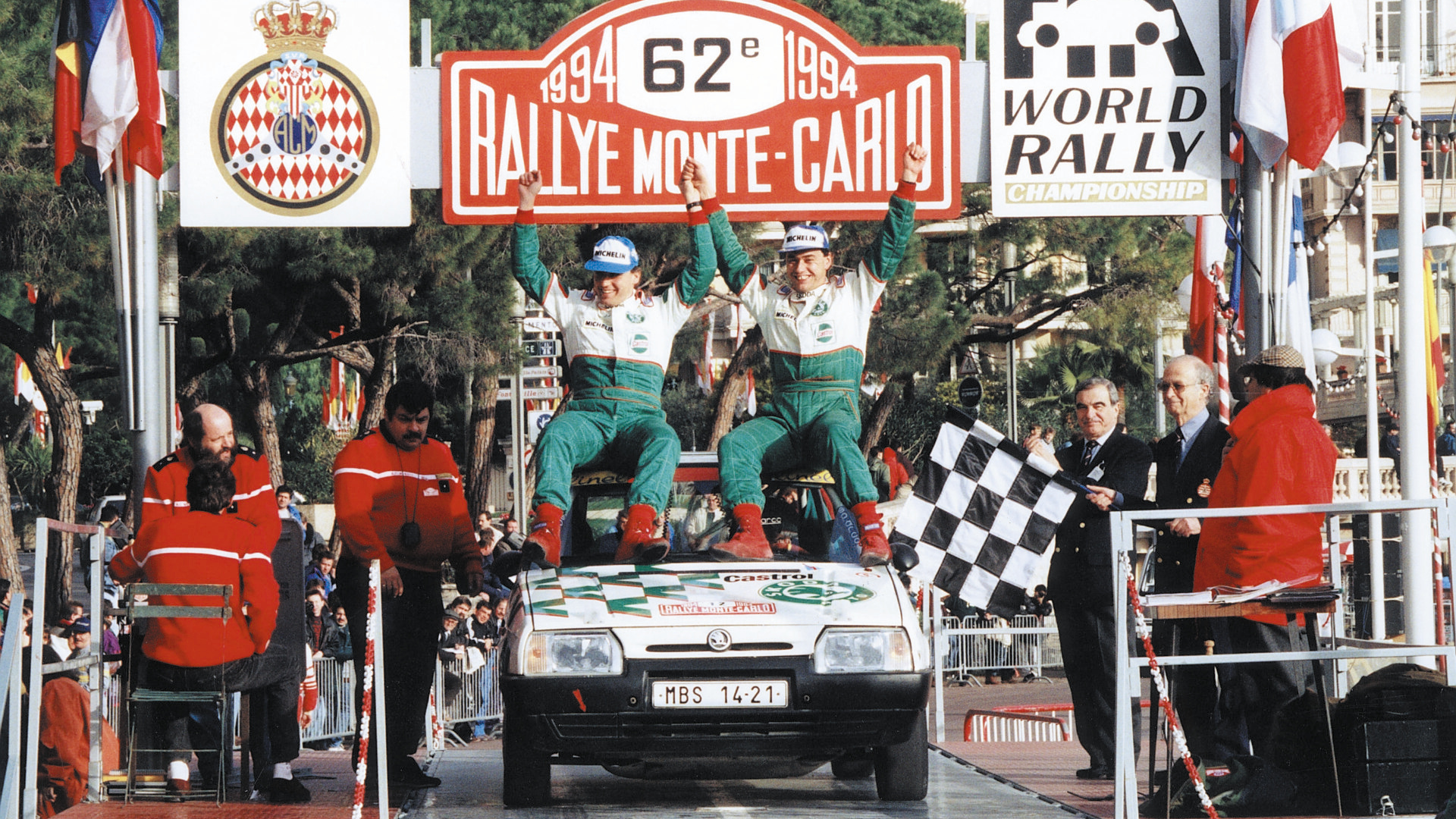
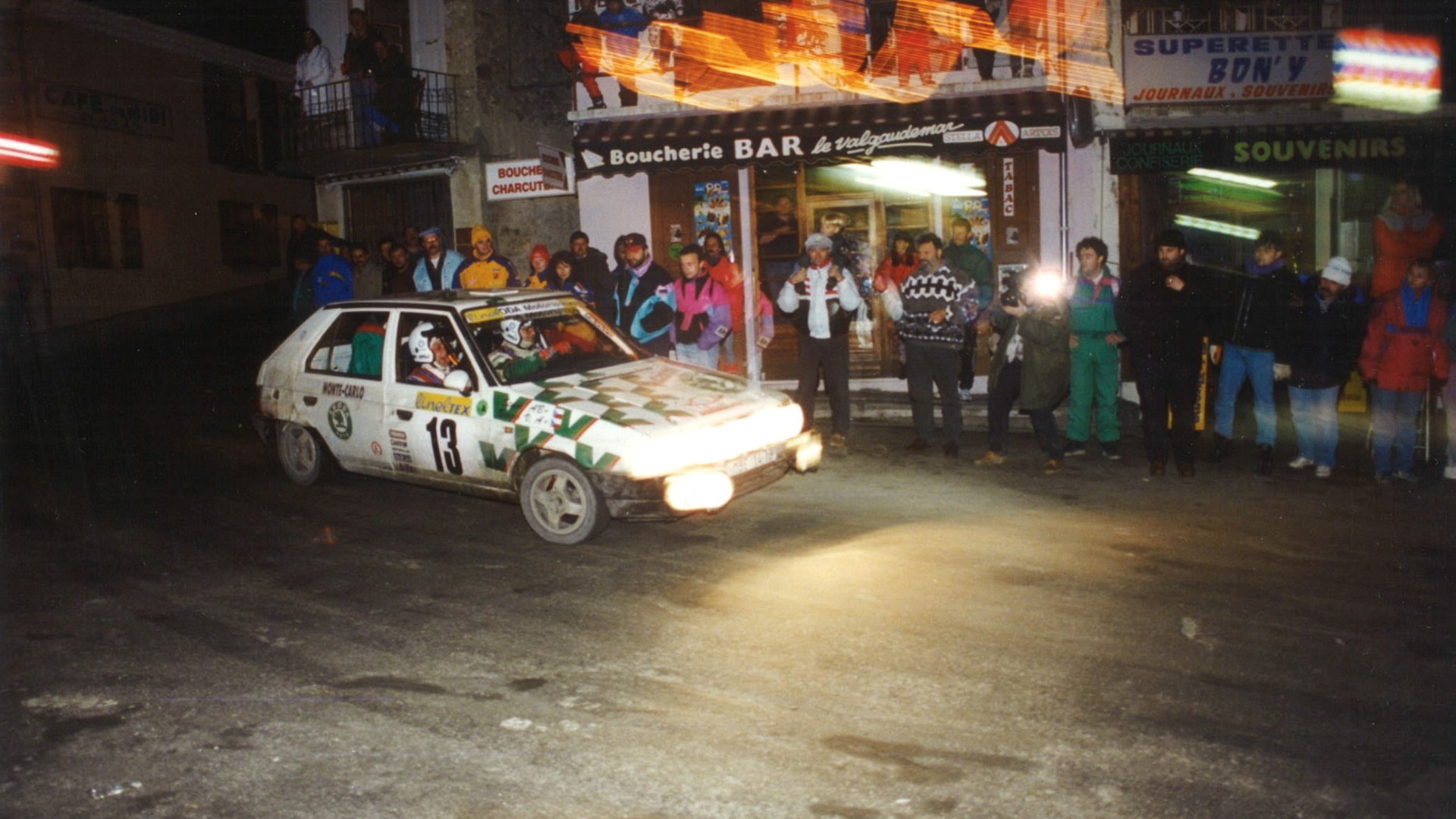
The increasingly successful Škoda Favorit quickly established a reputation as a tough and rapid competition car. It reinforced that reputation with class victories at international rallies such as the Rally of the Thousand Lakes, the Acropolis Rally and the Rallye Monte-Carlo, with drivers including Pavel Sibera, Emil Triner and Vladimír Berger behind the wheel. In the forests above the Principality of Monaco, Pavel Sibera and Petr Gross won their class four times between 1991 and 1994.
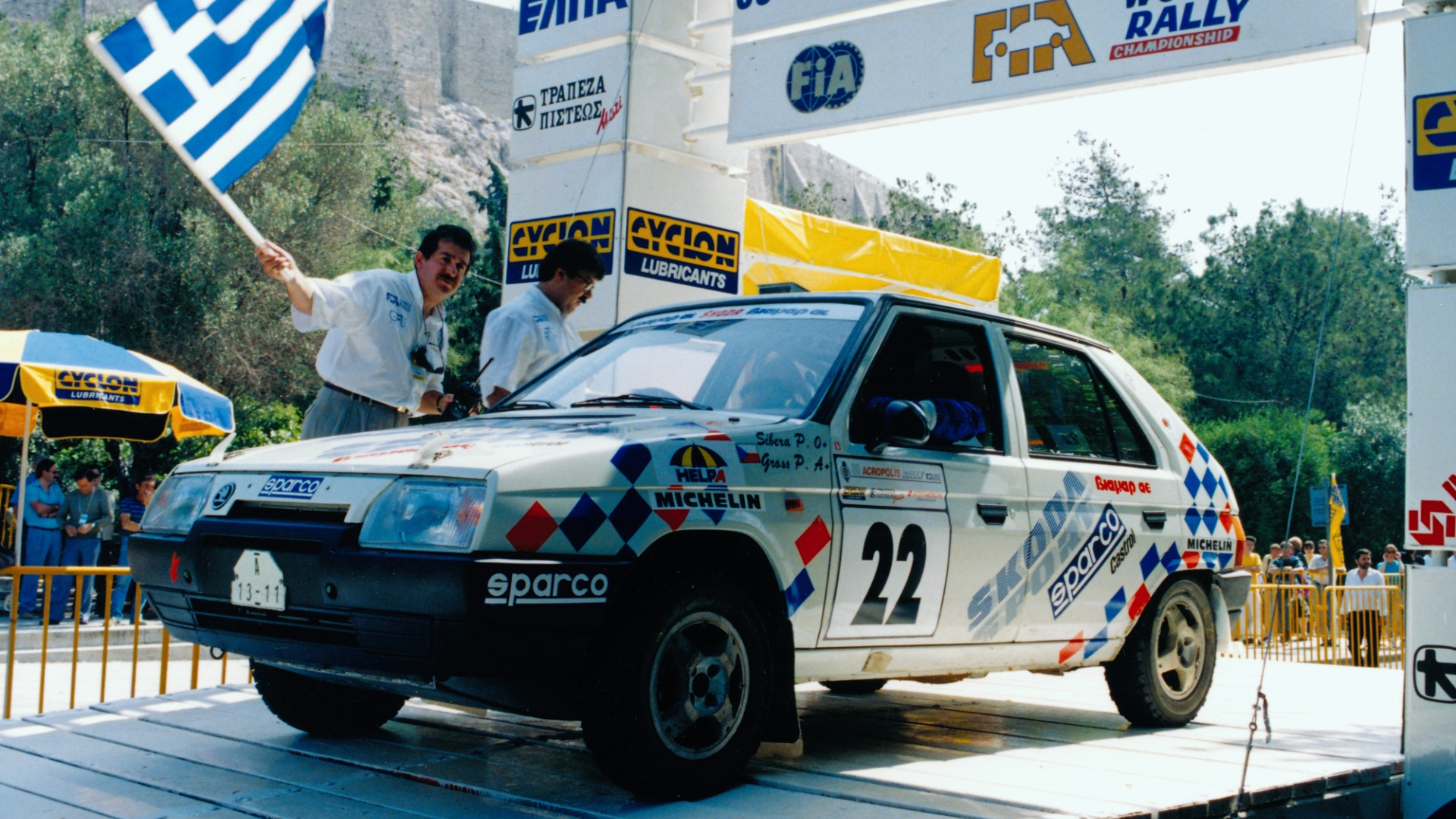
The year 1994 proved to be the most successful of all for the Favorit and for the factory crews of Sibera–Gross and Triner–Klíma. Following a series of outstanding performances (including a Top 10 overall finish on the Acropolis Rally in Greece), the world title was within reach. Škoda Motorsport therefore travelled to the distant Rally Australia for the first time, where the Czech crew of Sibera–Gross finished thirteenth overall. Ahead of them were only high-performance four-wheel-drive cars such as the Mitsubishi Lancer Evolution and the Subaru Impreza.
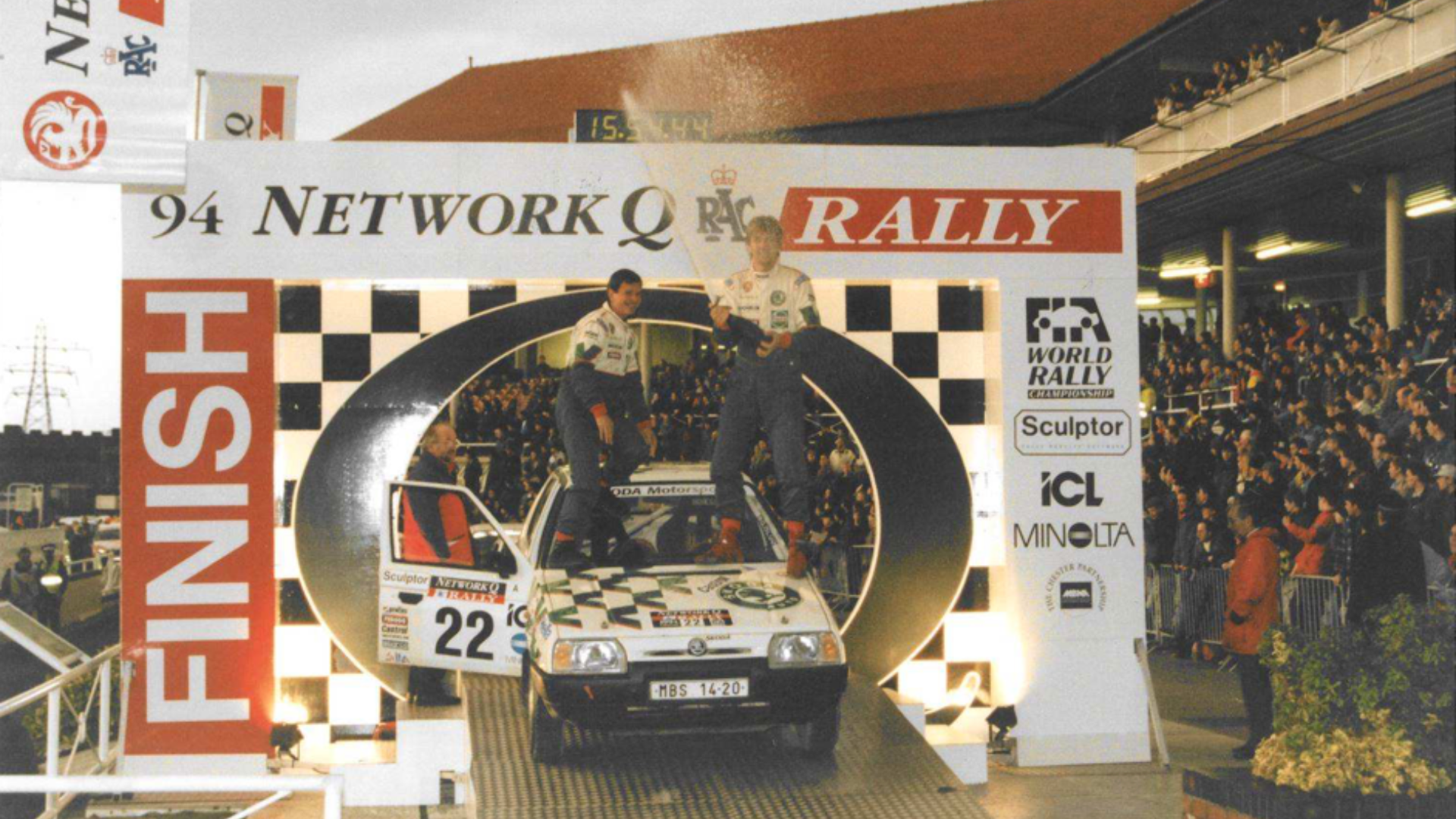
The historic achievement was sealed at the season-ending RAC Rally in Great Britain. There, the Favorit confirmed its dominance, and Škoda Auto secured the prestigious FIA World Cup for cars with a single-axe driveand an engine capacity of up to 2 litres (Formula 2). It was the Mladá Boleslav manufacturer's first world title in rallying. The outstanding season was further underlined at home by Jindřich Štolfa, who won the Czech Rally Championship in Class A5 with a Favorit. The Favorit was simply unstoppable.
The Škoda Favorit 136 L competition car, homologated in Group A, featured a five-door steel bodyshell. Even with its safety roll cage made of thin-walled tubing, its total weight was approximately 750 kg. It was powered by an aluminium liquid-cooled OHV four-cylinder engine with an eight-port cylinder head and a single carburettor. Output reached up to 120 hp, while the maximum speed depended on the gearing of the six-speed gearbox, ranging from 150 to 210 km/h.