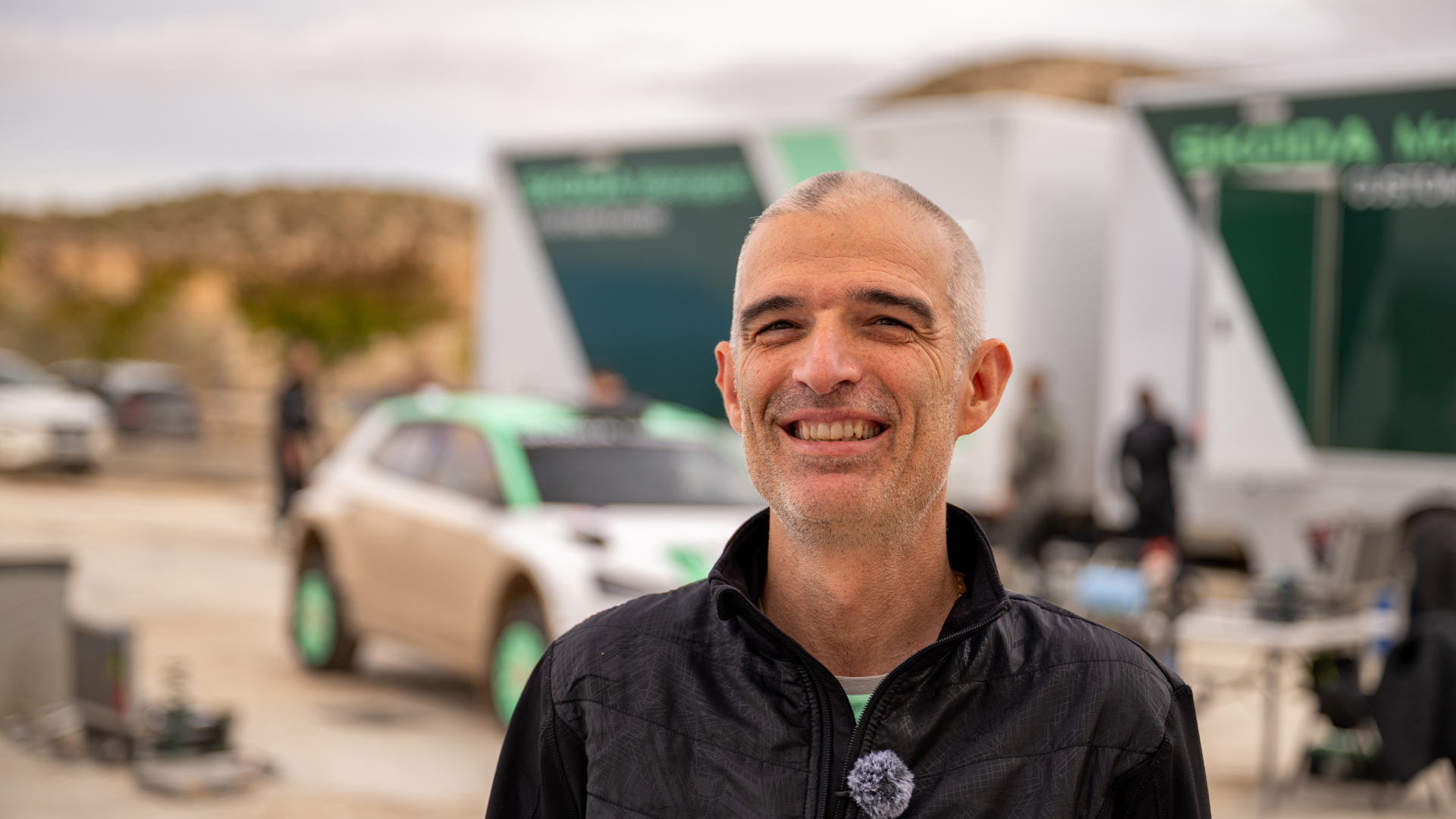
Škoda Motorsport Chief Engineer Eric Mommey has a passion for rallying in his blood. He has been with the team for almost 15 years, yet his drive to push forward, learn, and be part of the team is just as strong as it was at the beginning. What fascinates him most about rallying is its versatility and the need to never rest on one’s laurels.
Before joining Škoda Motorsport, Eric Mommey gained experience across a wide range of motorsport disciplines, from single-seaters and touring cars to Le Mans prototypes and Dakar rally vehicles. “Each discipline comes with its own challenges, and this experience taught me how to adapt quickly and focus on what truly influences performance in a given environment. Over time, I realised that I was most attracted to categories where strategy and teamwork play the leading role – endurance racing, Dakar and rallying – rather than pure sprints,” he says when reflecting on his career.
As chief engineer, you’ve left a significant mark on the 125-year history of the Škoda Motorsport team. How did your journey into motorsports begin?
I’ve wanted to work in motorsports since I was a child. That dream shaped every step I took, my scholarships I pursued and my studies and to my eventual choice of engineering school. My goal was to build the strongest possible technical foundation and enter motorsport as quickly as possible.
What was the biggest challenge in working on cars for cross-country rally events?
At the beginning, it was a major step because cross-country rallying is not only about speed. It requires strong teamwork, smart strategy, strict stress management and the ability to recover from setbacks – sometimes several times during a single event. The biggest challenge is to manage all of these aspects consistently.
And what made you switch to conventional rallying?
In addition to loving motorsport, I have always loved travelling. When the opportunity arose, rallying seemed like the perfect way to combine these two passions of mine. Rallying is unique because it takes you to incredible places across different continents, with a huge diversity of landscapes, road types and cultures.
You joined Škoda Motorsport almost 15 years ago, at a time when the Fabia S2000 was enjoying extraordinary success. How did you perceive the team at the time, and why did you decide to tie your professional future to it?
At that time, everything was focused on pure performance, with a factory programme, top-tier drivers competing in various championships and very high technical standards. The management also had a clear ambition to build on that success and become even more successful. Joining the team and becoming part of that exciting challenge was therefore a natural choice for me.
At that time, the Fabia S2000 still had two years at the top ahead of it. Were you involved in the final development of this successful car?
Yes. Towards the end of the Fabia S2000 era, I was involved on the sporting side, and one of the highlights was working with Andreas Mikkelsen in 2010 when he secured his first FIA victory in a Škoda Fabia S2000 at Wales Rally GB. In 2026, we are renewing our partnership, which makes looking back on that period even more special.
Everything, however, was moving towards a completely new chapter called the Škoda Fabia R5. How big a challenge was that for the engineers?
Every new FIA regulation set represents a major challenge in itself. In the case of the R5 category, the regulations introduced a cost cap and very clear technical restrictions, forcing you to be extremely efficient with every engineering decision. Furthermore, with the Fabia R5, our management wanted to set a new benchmark for customer rally cars. The objective was to build the most versatile car possible – competitive and reliable on all surfaces and suitable for a wide range of driving styles – while strictly complying with both the technical regulations and the cost limit.
In your opinion, what is the key to developing a successful rally car?
Developing a successful rally car is always about teamwork – from the design office all the way to the podium. It involves a lot of people with a wide range of skills and areas of expertise. I believe the key to Škoda Motorsport’s success lies in management’s ability to place the right people in the right roles and create strong cohesion throughout the organisation. That allows us to get the very bestout of every team member and every area of expertise.
From the very beginning, you’ve been involved in the development of two Škoda rally cars. How does the initial development of a car proceed?
It starts with setting clear targets – performance, reliability, cost and regulations. This ensures that all departments are on the same page from day one. We then define a timeline, which drives everything: design, manufacturing, quality control, testing, problem solving and re-testing, often through several iterations. At the same time, the core engineering work begins, during which we define the main load cases and durability targets to ensure the car can withstand real rally conditions on all surfaces and at all events.
Data collection and driver feedback are essential parts of development. How difficult is it for an engineer to translate those two elements into specific vehicle improvements?
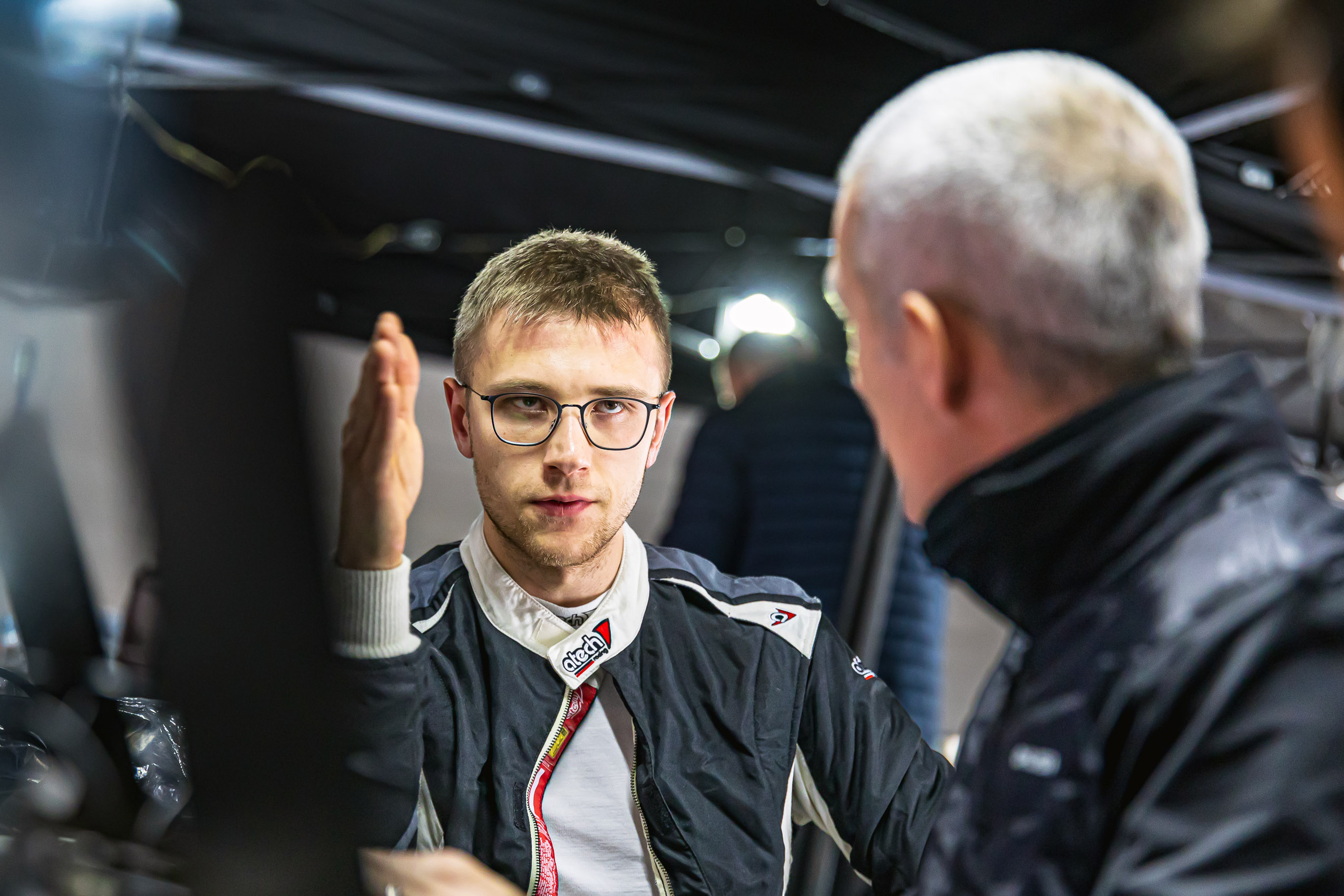
Thanks to the capabilities of modern data-collection systems, we can now measure almost anything during testing. The challenge is turning crew feedback into something quantifiable. That is why we must spend time understanding exactly what the crew means, literally. We need to avoid misunderstandings, particularly when language may become a factor. Before implementing specific changes to the car, we also conduct tests with different drivers and under different conditions. This allows us to compare feedback and build a more reliable assessment.
Have you ever wanted to get behind the wheel of a racing car yourself?
I never had any ambitions to compete as a driver. When I was younger, I spent some time driving on circuits, but purely for fun. In order to better understand crew feedback, I occasionally sat in the co-driver’s seat during Dakar and rally testing programmes. However, that was mainly at a time when sensors and data systems were not as advanced or as accurate as they are today. Nowadays, thanks to the precision of modern instrumentation, there is no need for me to be in the test car.
You are regularly present at events, especially in the World Rally Championship series. How do you help Škoda crews there?
Competition is always stressful for the crews. Our role as a team is to support them through calm and objective guidance based on our testing work, simulations and event experience. We try to anticipate as many situations as possible – setup choices, tyre strategy and how conditions may evolve. This allows the crew to focus solely on their job: driving as fast as possible on the special stages without unnecessary distractions.
How do you enjoy it when one of your crews wins?
I enjoy it immensely because victory is always the result of a joint team effort. Every victory deserves to be celebrated because none of them comes easily. Beyond the emotions, however, it is important for me to understand why we won: the work carried out in the design office, strict quality control, the way the car was assembled, the work of the mechanics on-site and the coordination provided by our technician, who translates the engineers’ requirements into reliable execution. Added to that is the ability to anticipate ever changing conditions during the rally, and of course the performance of the crew itself. Ultimately, every role matters, and a victory is never solely the crew’s achievement – it is always the achievement of the entire team.
What do you enjoy most about your job? Testing, competition or the development of the car and its components?
Honestly, I enjoy every part of the job. Design and testing are probably the most engineering-focused aspects, where ideas are transformed into performance. Competition brings emotion and travel into the equation. Together, that combination is exactly what makes this job perfect for me.

What advice would you give to young engineers drawn to the world of motorsports?
Dream big, believe in yourself and work hard. Motorsport rewards people who remain curious, build strong and solid foundations and never stop learning.
What are the three reasons that prove you made the right decision when you chose this profession years ago?
There are millions of reasons that confirm every day that I made the right choice. But if I have to pick three, they would be these. First, I still wake up every morning with enthusiasm and motivation, ready to travel the world and face challenges in a highly competitive environment.
Second, I have had the opportunity to work with amazing people who possess exceptional skills, which constantly motivates me to improve myself. And third, I never stop learning. There is always something new to understand, optimise and improve in order to push performance even further.